


 +91-7827475131
 contact@femmenest.com
 IVF and Infertility
 Gynaecology
 Robotic Gynecology
 Laparoscopic Surgery
 Fetal Medicine
 Birthing
 Hysteroscopy



If sperm-related issues have made conception difficult, or a previous IVF cycle didn't result in fertilisation, Femmenest is a trusted ICSI treatment centre in Delhi offering advanced lab-based fertility care tailored to each couple's diagnosis. ICSI (Intracytoplasmic Sperm Injection) is one of the most effective tools available for male-factor infertility — and our embryology team combines precision lab work with individualised clinical care to give every cycle the best possible chance.
This page explains what ICSI involves, who it helps, what to expect step by step, and gives a realistic picture of ICSI cost in Delhi, including for couples specifically searching for ICSI treatment in East Delhi.
In short: ICSI is a specialised form of IVF where a single, healthy sperm is injected directly into an egg in the lab, rather than leaving fertilisation to chance. It's most often recommended for significant male-factor infertility or after a previous IVF cycle showed poor fertilisation.
Intracytoplasmic Sperm Injection (ICSI) is an advanced laboratory technique used within an IVF cycle. After eggs are retrieved, an embryologist selects a single, healthy-looking sperm and injects it directly into the centre of each mature egg using a fine glass needle, under high-powered microscopic guidance. This bypasses many of the natural barriers sperm would otherwise have to overcome to fertilise an egg on their own.
Because ICSI is performed within an IVF cycle, the overall process — egg stimulation, retrieval, fertilisation, embryo culture, and transfer — closely follows standard IVF and infertility treatment, with ICSI specifically addressing the fertilisation step.
Our fertility specialists typically recommend ICSI for:
If male-factor concerns are mild rather than severe, your specialist may first suggest a less invasive option such as IUI treatment before recommending ICSI.
Throughout, our team closely tracks egg and sperm quality at each step — our blog on understanding the role of semen and egg analysis explains this evaluation in more detail.
ICSI is highly effective at the fertilisation stage specifically: a large majority of mature, healthy-looking eggs typically fertilise successfully once injected. However, fertilisation success doesn't automatically mean pregnancy — overall pregnancy and live-birth rates after ICSI broadly track standard IVF outcomes, which depend heavily on the woman's age, egg quality, and the underlying cause of infertility, generally being highest for women under 35 and declining with age. Our blog on how age impacts IVF success rates and how many eggs influence success covers this in more depth.
These are general, population-level figures rather than a personal prediction — your specialist will give you a realistic estimate based on your specific test results and medical history.
For couples specifically searching for ICSI treatment in East Delhi, choosing a clinic closer to home can meaningfully ease the process — ICSI cycles involve frequent monitoring visits over a couple of weeks, so shorter travel time matters more than it might seem at first. Femmenest serves patients across East Delhi and the NCR, with the same lab standards and specialist-led care you'd expect from any leading ICSI treatment centre in Delhi, without the added commute of travelling across the city for every appointment. If you're researching local options, our best gynecologist in East Delhi page is a useful starting point for general gynaecological care alongside fertility treatment.
In conventional IVF, eggs and prepared sperm are simply placed together in a dish, and fertilisation happens on its own. In ICSI, an embryologist actively selects and injects a single sperm into each egg. ICSI is generally reserved for cases where natural fertilisation is unlikely to succeed on its own — it isn't automatically "better" than standard IVF, just better suited to specific situations, mainly involving sperm quality. Your fertility specialist will recommend the right approach based on your semen analysis and treatment history.
Mild bloating, light cramping, or spotting after egg retrieval and embryo transfer is common and usually settles within a few days. Most patients are advised to avoid strenuous activity and heavy lifting for a short period after transfer. If you experience heavy bleeding, severe abdominal pain, fever, or shortness of breath, contact your clinic immediately rather than waiting for a scheduled follow-up, as these can occasionally signal complications like ovarian hyperstimulation that need prompt attention.
Learn more about our specialists on our team page, or read about our broader philosophy of care on the about us page. Ready to discuss your options? Book a consultation with our fertility specialists to find out whether ICSI is the right path for you.
Disclaimer: This content is for general informational purposes only and is not a substitute for professional medical advice, diagnosis, or treatment. Cost figures are indicative and based on prevailing market rates across the NCR region as of 2026; actual costs vary by individual diagnosis, treatment plan, and clinic. Please consult our fertility specialists for guidance specific to your situation.
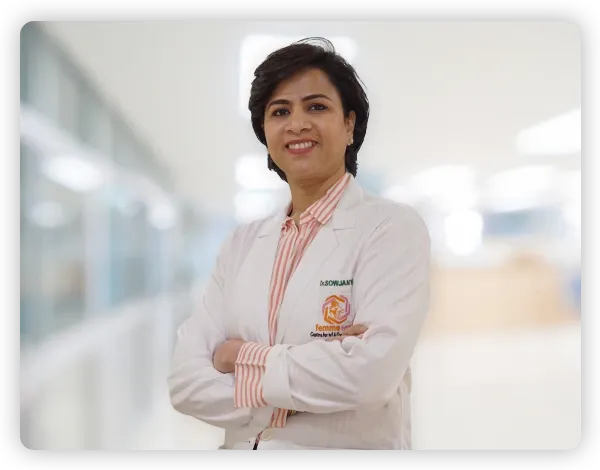
Director – IVF & Infertility, Laparoscopic & Robotic Gynae Surgery
Femme nest – Centre for IVF & Gynaecology
Max Super Speciality Hospital, Vaishali
Pushpanjali Medical Centre
 In-Vitro Fertilisation (IVF)
 Intrauterine Insemination (IUI)
 ICSI
ICSI PGS / PGD
 Male Infertility
 Laparoscopic Gynecology
 Robotic Gynecology
 General Gynecology
 Menopause
 Adolescent Care
 PCOS
PCOS Ovarian Cysts
 Fibroids
 Endometriosis
 Normal Delivery
 C-section Delivery
 High-risk PregnancyLow-risk Pregnancy
 Fetal Medicine
