


 +91-7827475131
 contact@femmenest.com
 IVF and Infertility
 Gynaecology
 Robotic Gynecology
 Laparoscopic Surgery
 Fetal Medicine
 Birthing
 Hysteroscopy

 Home
Home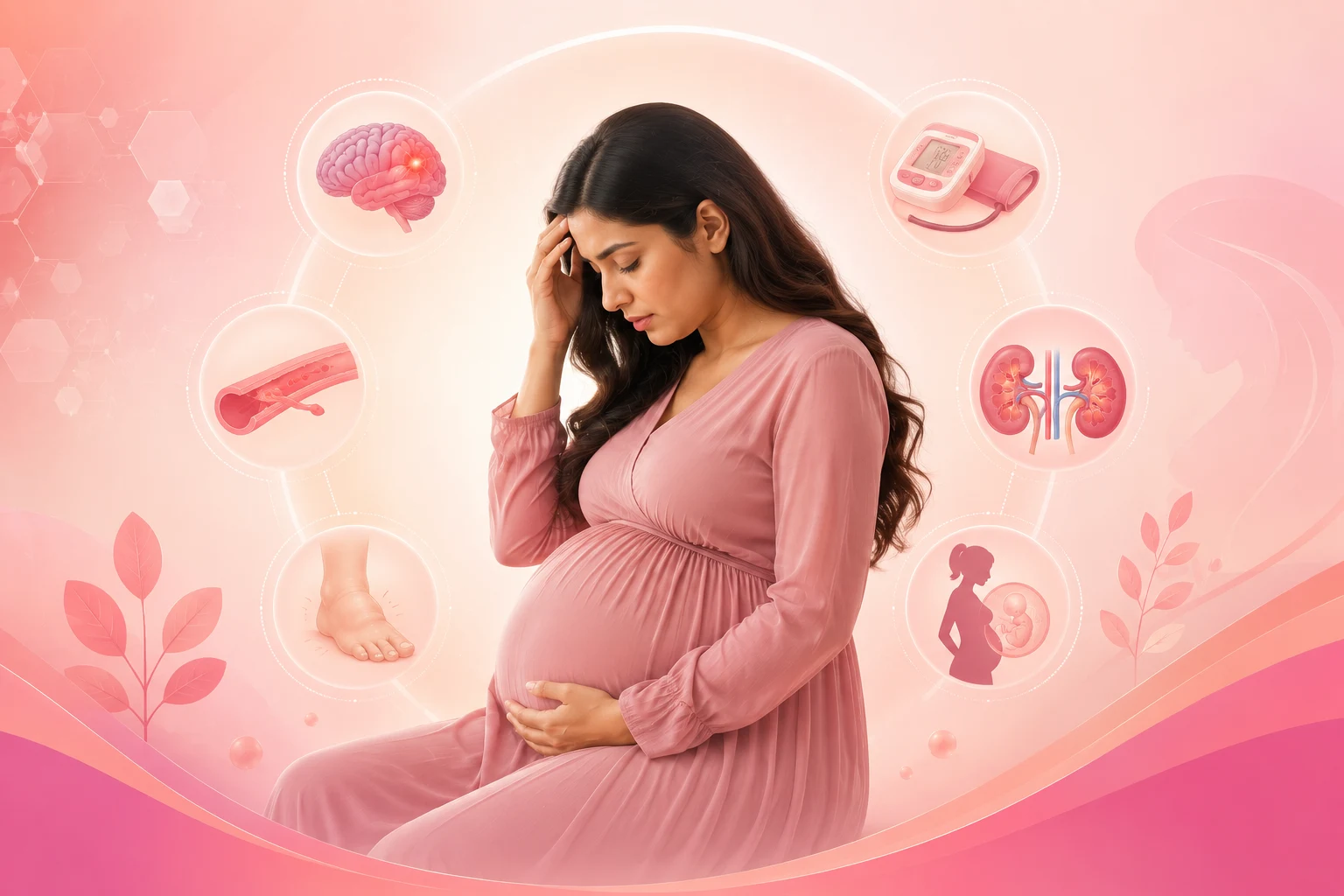
Preeclampsia may be scary. It can be rather silent at its beginning. That is why it is crucial to have regular antenatal care. It is only noticed by many expectant mothers in their late stages. A test is the first thing that some hear about. This is why it is important to have clear guidance. This guide describes the causes, symptoms and risks. It also depicts what treatment to expect in Ghaziabad. You will be aware when to take action.
Preeclampsia is a condition which is related to pregnancy. It is a cause of high blood pressure. It may also have an impact on organs. NHS advice indicates that it normally begins after 20 weeks. It may also manifest itself post-delivery. This is why the post-birth symptoms are of concern.
The placenta has a significant role to play. Preeclampsia may be life-threatening when it is not treated. The baby and mother should be safeguarded.
Its cause is not known. Physicians think that the placenta is at the centre of the problem. It is due to this that close pregnancy monitoring is so imperative. In certain pregnancies, there is a greater risk. There are various factors that the NHS and ACOG list for OG. These are the first pregnancy, long interval, obesity and previous preeclampsia. The other risk factors are chronic hypertension, kidney disease, diabetes, autoimmune disease, multiple pregnancy and family history, which are high-risk factors.
Preeclampsia may present itself at an early stage without any noticeable symptoms. This is the reason why antenatal checks are important. It can be detected early by blood pressure and urine tests.
When the symptoms feel urgent
|
Symptom |
Why it matters |
Action |
|
Severe headache |
Can signal worsenin disease |
Seek urgent medical help. |
|
Vision changes |
May suggest brain involvement |
Seek immediate review. |
|
Upper abdominal pain |
Can suggest liver involvement |
Do not wait. Get checked. |
|
Face or hand swelling |
Can be part of a severe disease |
Contact the care team quickly. |
|
Vomiting or feeling unwell |
May occur with severe features |
Needs prompt assessment. |
The majority of the cases are not serious. Nevertheless, the situation may be hazardous. Such a risk increases untreated. In the case of the baby, the risks are a slower growth and preterm birth. The placental blood flow issues are also observed in the NHS and Mayo Clinic. That may restrict oxygen and nutrients.
|
Risk |
Mother or baby |
Why it matters |
|
Slower baby growth |
Baby |
Placental blood flow may be reduced. |
|
Premature birth |
Baby |
Delivery may need to happen early. |
|
Eclampsia |
Mother |
Seizures can be life-threatening. |
|
HELLP syndrome |
Mother |
A rare liver and blood complication. |
|
Stroke |
Mother |
Very high blood pressure can trigger it. |
|
Stillbirth |
Baby |
Severe, untreated disease can increase risk. |
Blood pressure and urine tests are the beginning of the diagnosis. Doctors include blood tests and growth scans, as necessary. That assists in verifying the mother and baby. Treatment is based on the severity. There are those women who can be followed at home. Some require hospital attention and more monitoring.
Medicine can be prescribed by doctors to reduce blood pressure. They can also administer medication to prevent epileptic seizures. In case of a severe condition, it might be delivered prematurely.
Diagnosis and treatment comparison
|
Step |
What happens |
Common setting |
|
Screening |
Blood pressure and urine are checked |
Routine antenatal visit. |
|
Further testing |
Blood tests and an ultrasound may follow |
Hospital or specialist review. |
|
Mild cases |
Monitoring and regular scans |
Home or outpatient care. |
|
Severe cases |
Medicines and close monitoring |
Hospital admission. |
|
Delivery planning |
Labour induction or caesarean may be advised |
Depends on gestation and risk. |
Can preeclampsia happen after delivery?
Yes. NHS claims that it can start in days or weeks after birth. Postpartum headaches, edema or visual alterations are yet to be addressed urgently.
Does high blood pressure always mean preeclampsia?
No. Preeclampsia is not the only way that high blood pressure in pregnancy can exist. Prior to the confirmation of the condition, doctors seek protein in urine and organ effects.
Can preeclampsia be prevented completely?
There is no definite prevention. However, danger can be reduced by antenatal monitoring, aspirin in the case of high-risk women and timely treatment.
Will I always need a caesarean if I have preeclampsia?
No. Some women give birth through the vagina. Others require induction or caesarean, which is based on the severity and the condition of the baby.
Preeclampsia is severe, yet treatable. Early checking has the most significant difference. Extra tests are not commonplace (blood pressure, urine tests). They play a crucial role as protective measures. In case you experience headache, swelling, vision changes or upper abdominal pain, get help immediately. Wait, not till the next appointment. Quick intervention saves the life of the mother and baby. In case you are in Ghaziabad, select the best gynecologist in ghaziabad who practices strict antenatal monitoring. That involves an articulate risk review and expedited escalation where necessary. Talk to an Expert at www.femmenest.com
