


 +91-7827475131
 contact@femmenest.com
 IVF and Infertility
 Gynaecology
 Robotic Gynecology
 Laparoscopic Surgery
 Fetal Medicine
 Birthing
 Hysteroscopy



Laparoscopic myomectomy surgery in Delhi is a keyhole procedure used to remove uterine fibroids while leaving the uterus in place — making it a fertility-preserving option for women who want to have children in the future.
Laparoscopic myomectomy is a minimally invasive surgery that removes uterine fibroids (myomas) through a few small abdominal incisions instead of one large cut. A thin camera, the laparoscope, gives the surgeon a magnified, real-time view inside the abdomen while specialised instruments are used to separate the fibroids from healthy uterine tissue and remove them.
Because the uterus itself is repaired and preserved rather than removed, this approach is commonly chosen by women who still want to conceive, as opposed to a hysterectomy, which removes the uterus entirely. Compared to traditional open (abdominal) myomectomy, it generally involves smaller scars, less blood loss, and a shorter hospital stay.
Your gynecologist may recommend this surgery if you're experiencing:
Is it right for every fibroid case? Not necessarily. Laparoscopic myomectomy tends to work best when there are a limited number of fibroids of moderate size. Larger, more numerous, or awkwardly placed fibroids are often better managed with robotic myomectomy, which offers the surgeon greater precision for complex cases, or with open surgery. The right approach depends on the size, number, and location of your fibroids on ultrasound or MRI — something your surgeon will confirm during your consultation rather than something a general guideline can determine on its own.
The procedure is done under general anaesthesia and typically follows these steps:
The surgery usually takes between one and three hours, depending on the size and number of fibroids.
| Factor | Laparoscopic Myomectomy | Open (Abdominal) Myomectomy |
| Incision | A few small ports (under 1 cm) | One larger abdominal incision |
| Hospital stay | Usually 1–2 days | Usually 3–5 days |
| Recovery time | Around 2–4 weeks | Around 4–6 weeks |
| Blood loss | Generally lower | Generally higher |
| Scarring | Minimal | More visible |
| Best suited for | Fewer, moderate-sized fibroids | Larger or multiple fibroids |
Most women go home within a day or two and resume light activity within a week. A general recovery timeline looks like this:
If fertility was the main reason for surgery and conception doesn't happen naturally within a reasonable time afterward, it's worth discussing further options with a fertility specialist, including IVF and infertility treatment.
As with any surgery, laparoscopic myomectomy carries some risks, which your surgeon will go through in detail based on your case:
These risks are uncommon when the procedure is performed by an experienced laparoscopic surgeon, but they're never reduced to zero — which is why pre-surgery imaging and a thorough discussion with your surgeon matter.
Femmenest's laparoscopic myomectomy removal surgeon in Delhi, Dr. Sowjanya Aggarwal, brings over 20 years of experience in laparoscopic and robotic gynaecology, with fellowship training in Minimal Access Gynae Surgery and Reproductive Medicine. She is a member of the Indian Society for Assisted Reproduction (ISAR) and the Indian Association of Gynaecological Endoscopists (IAGE), and practises out of Max Super Speciality Hospital, Vaishali, and Pushpanjali Medical Centre.
What this means for patients considering surgery:
To learn more about the team behind these treatments, visit our team page or read more about Femmenest.
Disclaimer: This content is for general informational purposes only and is not a substitute for professional medical advice, diagnosis, or treatment. Cost figures are indicative and based on prevailing market rates across the NCR region as of 2026; actual costs vary by individual diagnosis, treatment plan, and clinic. Please consult our fertility specialists for guidance specific to your situation.
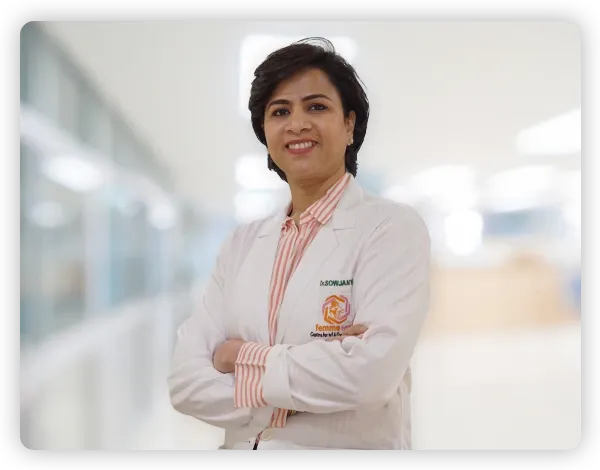
Director – IVF & Infertility, Laparoscopic & Robotic Gynae Surgery
Femme nest – Centre for IVF & Gynaecology
Max Super Speciality Hospital, Vaishali
Pushpanjali Medical Centre
 In-Vitro Fertilisation (IVF)
 Intrauterine Insemination (IUI)
 ICSI
ICSI PGS / PGD
 Male Infertility
 Laparoscopic Gynecology
 Robotic Gynecology
 General Gynecology
 Menopause
 Adolescent Care
 PCOS
PCOS Ovarian Cysts
 Fibroids
 Endometriosis
 Normal Delivery
 C-section Delivery
 High-risk PregnancyLow-risk Pregnancy
 Fetal Medicine
