


 +91-7827475131
 contact@femmenest.com
 IVF and Infertility
 Gynaecology
 Robotic Gynecology
 Laparoscopic Surgery
 Fetal Medicine
 Birthing
 Hysteroscopy

 Home
Home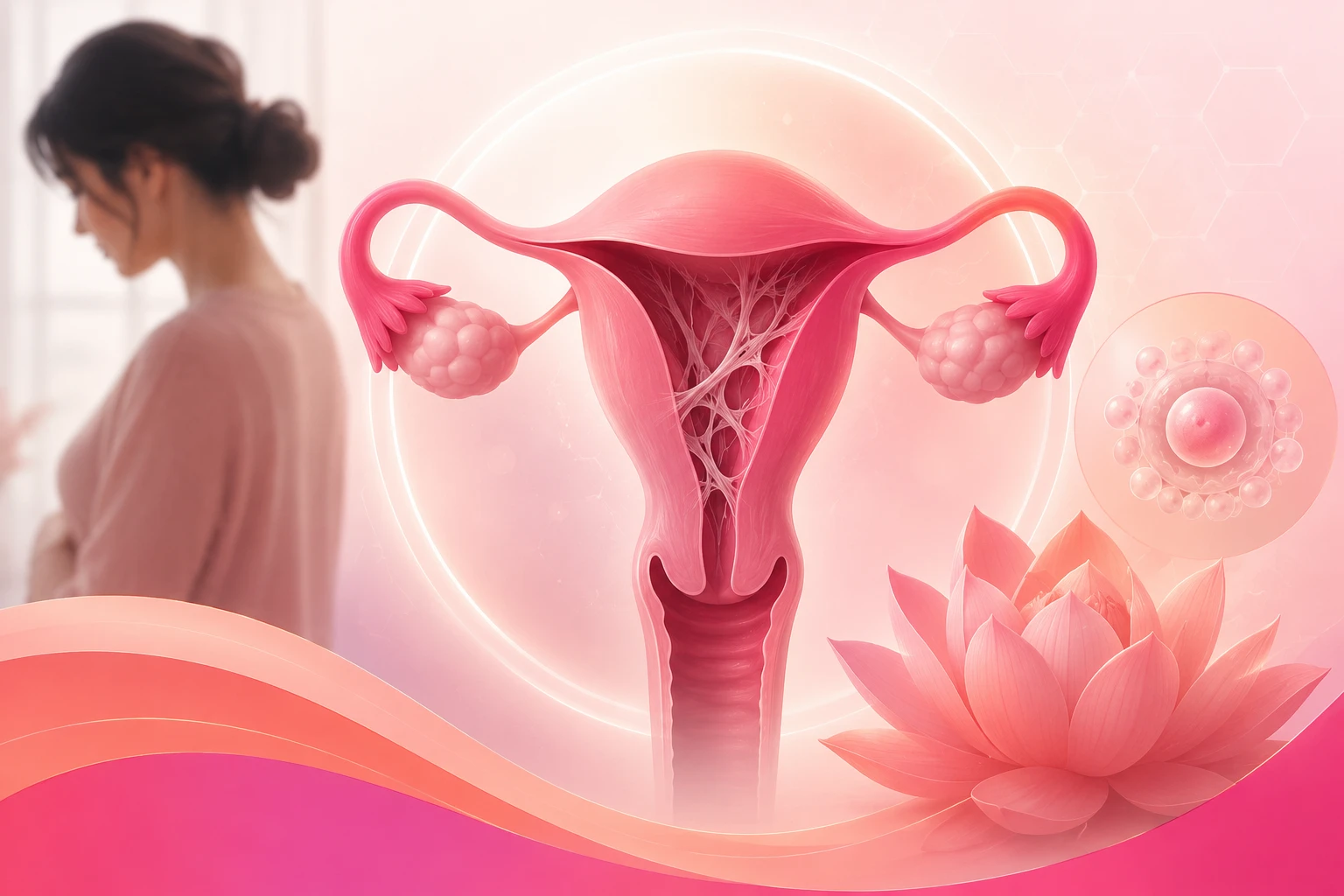
Lack of a period may be perplexing. So may recurrent pain following a procedure. In certain women, it is due to scar tissue.
Scar tissue has the ability to influence cycles and fertility. It can also cause pregnancy to be difficult to sustain. The stress may accumulate in a short time.
This is a guide to what the syndrome of Asherman is. It discusses the symptoms, causes, diagnosis and treatment. It also indicates when to call the expert assistance in Ghaziabad.
The syndrome of Asherman is also known as intrauterine adhesion. It occurs when scar tissue forms within the uterus or cervix. The scar tissue is able to reduce the cavity. Periods can vary when the space in the uterus gets smaller. The lining does not shed normally. That may have an impact on implantation and pregnancy.
What causes Asherman’s syndrome?
The majority of the cases are after damage to the uterine lining. The most common trigger is a D&C. This could occur following miscarriage, birth, or abortion.
There are other reasons, such as removal of endometrial polyps, fibroid surgery and certain hysteroscopic procedures. Rare causes are pelvic infection, tuberculosis, radiation and uterine artery embolisation.
Which procedures raise the risk?
The risk increases following repeated uterine procedures. It also increases in the case of a procedure performed shortly after childbirth. A pregnant uterus is more susceptible to damage, especially when it is newly pregnant.
Common triggers include:
Who is at higher risk?
|
Risk factor |
Why does it raise concern |
|
Repeated D&C |
More endometrial trauma |
|
Recent childbirth |
The healing uterus is more sensitive |
|
Placenta accreta or retained placenta |
More uterine intervention is needed |
|
Prior uterine surgery |
Can create adhesion-prone injury |
The symptoms may be mild or non-existent. Some women do not see anything. Other people develop definite menstrual changes.
Look for:
No flow pain can be an indication. The blood can be confined behind scar tissue. This is why symptoms are not to be overlooked.
Physicians begin with a history of symptoms and procedures. The most frequent hint is history. They subsequently verify the issue of cavity using imaging or hysteroscopy. The primary test is diagnostic hysteroscopy. A slender camera is used to have a direct view of the inside of the uterus. It depicts the adhesions and the degree of adhesions.
Ultrasound can be of assistance as well. Some doctors perform saline infusion sonography. That will map out the cavity better. A fertility expert in Ghaziabad ought to clarify the outcome. Severity, rather than presence, should be demonstrated in the report. That assists in informing the treatment plan.
The main treatment is operative hysteroscopy. A camera-directed procedure is used to remove scar tissue by the doctor. That restores space and functioning of the uterus. Some women require a series of operations. The density of adhesions will determine that. The use of estrogen or a barrier by doctors can follow treatment.
Treatment options compared
|
Option |
Best for |
Key point |
|
Operative hysteroscopy |
Most cases |
The main treatment to remove adhesions. |
|
Estrogen support |
After surgery |
It may help the lining heal. |
|
Intrauterine balloon or catheter |
Preventing re-sticking |
Keeps the uterine walls apart during healing. |
|
Repeat hysteroscopy |
Dense or recurring adhesions |
Sometimes needed for full restoration. |
Cost comparison for treatment planning
|
Option |
Typical financial load |
Why |
|
Initial consultation and scan |
Lower |
Usually, the first assessment step. |
|
Diagnostic hysteroscopy |
Moderate |
Uses specialist equipment and expertise. |
|
Operative hysteroscopy |
Higher |
Involves procedure time and theatre resources. |
|
Repeat surgery or fertility treatment |
Highest |
Needed if adhesions recur or pregnancy support is required. |
Can Asherman’s syndrome go away on its own?
No. Scar tissue does not tend to dissolve on its own. In the majority of cases, it is necessary to treat them with the help of a hysteroscope, which will remove adhesions and restore the uterine cavity.
Can I still get pregnant after treatment?
Yes, a lot of women are able to. The possibility of pregnancy is determined by the severity of the adhesions and the healing of the uterus following surgery.
Is hysteroscopy painful?
Some people may experience period pain when having a hysteroscopy. According to NHS guidelines, painkillers can be used, and the procedure is quite painful for some patients.
Why did my periods become lighter after a D&C?
Such a pattern may occur when there is the development of scar tissue following a uterine procedure. It is among the typical hints that ought to be verified.
Asherman syndrome is a curable cause of infertility and changes in the menstrual period. It is usually a follow-up to a procedure on the uterus. It may even remain undetected for months. Light periods, no periods, pain and pregnancy difficulty are the key indicators.
Hysteroscopy is commonly used to make the diagnosis. The common method of treatment is the removal of the scar by the same route.
Should you be in Ghaziabad, select an IVF centre in Ghaziabad that boast knowledgeable specialists about uterine adhesions and fertility planning. This is particularly necessary following the care of miscarriages or the previous uterine surgery. Talk to an Expert at www.femmenest.com
